
SpaceX Wants to Handle the World’s Broadband

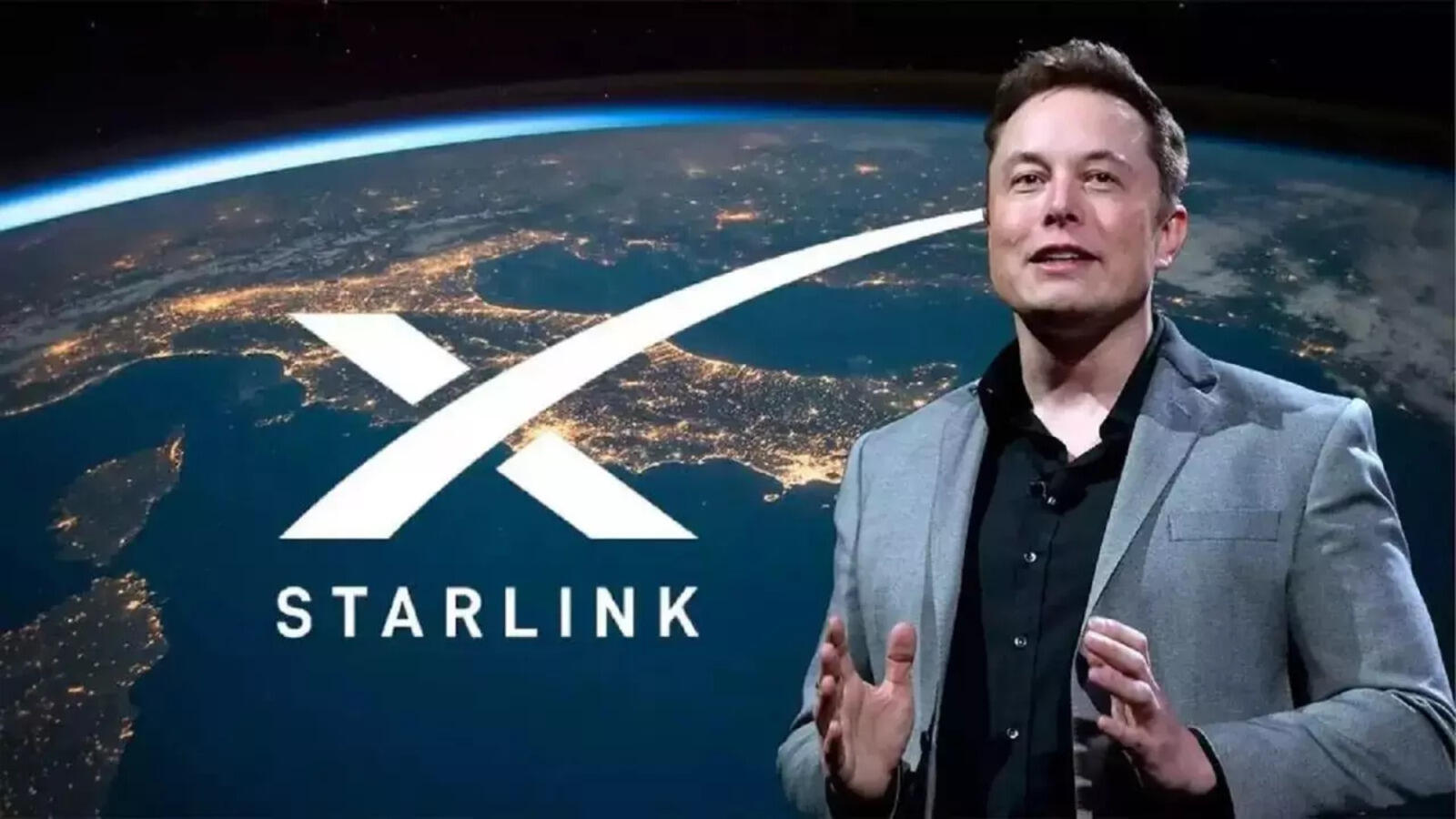
Starlink’s Ambitious Goal and Reality Check
Starlink, a satellite broadband service by SpaceX, has requested the FCC to expand its satellite fleet to 100,000. This request aligns with the FCC’s plans to simplify satellite approvals, suggesting it may be approved. A notable claim in Starlink’s filing is its ambition to manage the majority of global Internet traffic. However, analysts find this goal unreasonable.
Currently, no provider handles a significant share of global internet traffic; the largest, Amazon, accounts for only 3.5%. Other major players include Cloudflare, Comcast, Microsoft, and AT&T, with SpaceX ranking 18th, carrying just 0.7% of the world’s traffic. For SpaceX to compete with Amazon, it would need to increase its share five-fold, which still wouldn’t equate to majority control. The concept of any company managing even 10% of global internet traffic seems implausible.
SpaceX is telling the Federal Communications Commission to consider ending a $4.5 billion fund that subsidizes voice and broadband in rural areas, arguing that Starlink has solved the connectivity gap by offering fast speeds at competitive rates.
“The Commission’s universal service programs must adapt to a reality where the long-standing problem of high-speed broadband network access has effectively been solved, rendering most legacy High-Cost support mechanisms redundant,” the company wrote.
The Internet gap between rich and poor
As dependent as we are on the Internet, we’re always eager to see improvements in speed, quality and access. For the developed world, the Internet is a given, but globally, that’s not the case. Statistics provided by the United Nations Broadband Commission may surprise you. According to their report, the majority of the human population (50%) don’t have access to the Internet for a wide range of reasons: bad infrastructure, hard-to-reach areas and overall poverty. However, the number of connected people is still staggering: more than 3.8 billion people. But that shouldn’t blind us to the need to connect everyone else.
Elon Musk strikes again
Meeting this kind of need is the stuff inventors live for, and Elon Musk has a dream of connecting the world. His private rocketry company, SpaceX (Space Exploration Technologies Corporation), is determined to make global Internet a reality by providing access to high-speed Internet with satellites. “Once fully deployed, the SpaceX System will pass over virtually all parts of the Earth’s surface and therefore, in principle, have the ability to provide global Internet.” This means that even the remotest places “on the Earth’s surface will see, at all times, a SpaceX satellite.” Imagine ”fast Internet on the North Pole, the middle of the Pacific Ocean, the top of Mount Everest — anywhere.”
Musk’s goal is to become a leading Internet provider for the US, and perhaps globally as well. To finance this dream, Musk and his team will need at least $10 billion. Google Inc. and Fidelity Investments have already come on board, providing SpaceX with $1 billion. Musk believes this is just the beginning. It uses low Earth orbit (LEO) satellites, which provide much lower latency, faster download speeds, and no hard data caps.
Bringing high-speed Internet to the entire world
Elon Musk’s satellite system reaches far and wide — and better than existing systems, with greater speed and lower latency than existing satellite networks. Typically satellites are at such a distance from earth there is trouble with latency. But, by launching more than 4000 satellites into low-Earth orbits should reduce this problem, and Musk thinks his satellites will provide latency between 25 and 35ms – almost like wired Internet services.
According to Federal Communications Commission (FCC) measurements, current satellite ISPs have latencies of 600ms or more, which means that SpaceX’s satellite system will be capable of delivering a comparatively impressive amount of data per second, eliminating the limits usually imposed by Internet providers.
Promising truly global coverage
SpaceX aims to create a global Internet system by building its own satellites and ground stations. By using low-profile terminals on rooftops, customers will receive fast and reliable Internet. Even with 800 satellites, SpaceX plans to offer worldwide broadband coverage.

Cheap Internet Service Providers

Optimum’s latest fiber internet deal costs only $25 a month – See if You Qualify

Cheap Smartphones will soon be gone

California Lifeline Telephone Program – Discounted Home or Cell Phone Services